11/16/2025
The Hidden Value of Tracking Small Progress: Why Leaders Who Reflect Win More
Why consistent reflection on small wins strengthens clarity, performance, and long-term leadership effectiveness.
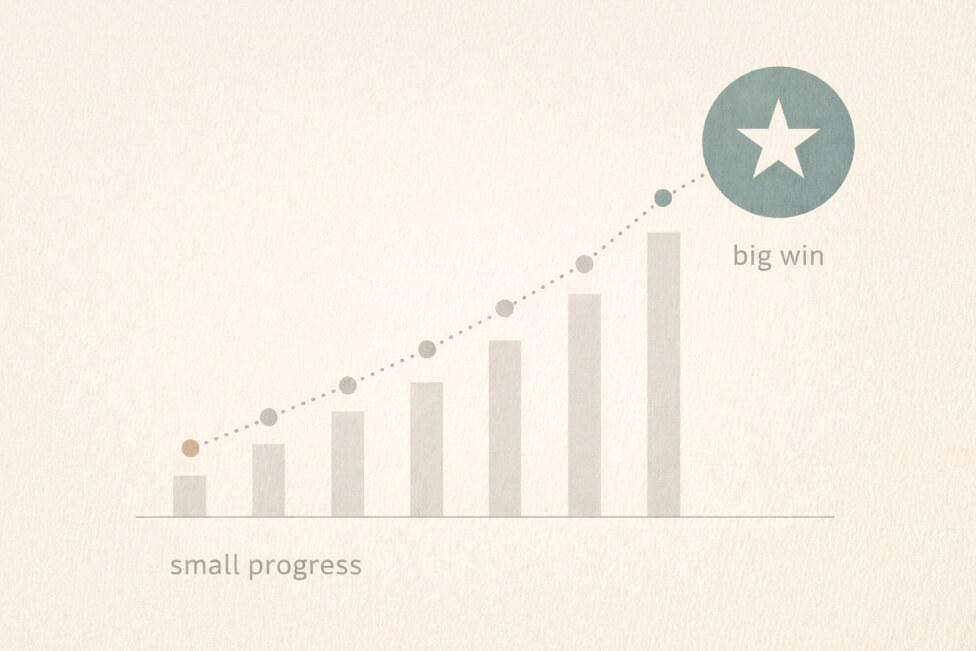
Most leaders dramatically underestimate the power of small progress. They chase big milestones, major launches, and high-stakes decisions — but overlook the tiny, quiet steps that compound into real transformation.
Yet research is clear: leaders who regularly reflect on small wins make better decisions, stay more motivated, and build stronger teams. Small progress is not trivial; it is a psychological lever that stabilizes performance and strengthens judgment.
This is why the best leaders, founders, and executives develop a simple rhythm of reflection. And when done consistently, it becomes a competitive advantage that is almost unfair.
This article explores why small progress matters, how reflection boosts leadership effectiveness, and how to build a sustainable system for noticing and capturing it.
Why Small Progress Matters More Than You Think
1. Small wins shape mindset and momentum
Progress creates energy. Even small progress releases dopamine, increases intrinsic motivation, and enhances clarity. Leaders who feel steady momentum make better decisions because they operate from confidence rather than pressure.
A leader without a reflection habit often feels like nothing is moving.
A leader who tracks progress sees movement everywhere.
2. Small progress reveals patterns big goals never show
Major goals hide the details. But small steps — solved blockers, clearer decisions, improved communication, reduced friction — show what is actually working and what is not.
Leaders who reflect weekly build deep situational awareness.
They catch issues before they grow.
They double down on what truly moves the needle.
3. Reflection strengthens judgment and reduces regret
Regret is often the product of unclear thinking in the moment.
Reflection gives you the ability to:
- examine the quality of your decisions
- evaluate assumptions
- see where emotion influenced behavior
- refine your instincts
Leaders with stronger judgment tend to win not because they are smarter, but because they learn faster.
4. Small progress builds resilience
When pressure rises, it is easy to forget how much is actually going well. A reflection system becomes a psychological buffer:
- It reduces anxiety.
- It creates stability in chaotic periods.
- It balances challenge with proof of competence.
Teams feel this too. Leaders who communicate small wins create confidence and trust across the organization.
What Happens When You Don’t Track Progress
Leaders without a progress-tracking habit experience predictable problems:
- Work feels repetitive or stagnant
- Urgent tasks swallow strategic focus
- Decisions repeat
- Context disappears
- Motivation dips
- Teams feel unseen or unclear
This is not a discipline problem — it’s a system problem.
Without a place to capture small progress, your brain simply forgets it.
How to Build a Progress-Reflection System That Actually Works
The best systems are simple, repeatable, and honest. Here is a structure used by top-performing founders and executives.
1. Set a weekly time and protect it
Choose a 10-minute weekly slot. Same day. Same time. No debates.
Consistency matters more than duration.
2. Capture three types of small progress
Reflect on:
a. Wins
What went well? What moved forward, even slightly?
b. Learnings
What did you understand better this week? What assumptions changed?
c. Improvements
Where did you reduce friction? What became easier or clearer?
This method captures growth from three angles — performance, clarity, and capability.
3. Track decisions and insights separately
Progress without insight is incomplete.
Keep a simple record of:
- decisions made
- reasons behind them
- what you expect to happen next
This builds long-term judgment and reduces rethinking work later.
4. Review your history once a month
Patterns only emerge in hindsight.
A once-a-month scan helps you:
- identify real momentum
- spot recurring blockers
- shift priorities intelligently
- keep long-term strategy connected to daily work
Leaders who do this make cleaner, quieter decisions.
5. Use a workspace that keeps everything private
Progress reflection is personal.
It must be honest.
It must be private.
Leaders need a space without sharing, feeds, or noise — a place built for thinking, not performing.
This is where Leaderbook becomes powerful.
How Leaderbook Helps Leaders Track Small Progress
Leaderbook is designed as a private leadership system that captures the details your brain forgets but your decisions depend on.
Leaders use it to:
- log micro-wins throughout the week
- keep decisions, insights, and reflections organized
- link notes to people and projects
- revisit patterns and themes across months
- avoid repeating conversations or losing context
Everything in Leaderbook stays private by default, creating the mental space leaders need to think deeply without distraction.
Progress becomes visible.
Patterns become actionable.
Leadership becomes intentional.
Final Thoughts
Small progress is not small.
It is the foundation of long-term performance, clear thinking, and resilient leadership.
Leaders who reflect consistently:
- make better decisions
- experience less stress
- stay more motivated
- build stronger, more aligned teams
If you want to improve your leadership without adding complexity, start with the simplest habit: track your progress and reflect weekly.
And if you want a workspace designed specifically for leaders — private, structured, and calm — Leaderbook is built for exactly this.